

Can a CPA File Form 720 for Clients? A Complete Guide
Yes, a CPA can file Form 720 for clients. In most cases, the CPA may prepare the return, sign as the paid preparer and e-file it through an appropriate IRS-authorized e-file process, as long as the client has reviewed and authorized the filing.
The more important question is not whether a CPA is allowed to file Form 720. It is whether the CPA has the right client authorization, records, excise tax knowledge and workflow to file it accurately. Form 720 is not a routine income tax return. It reports federal excise taxes tied to specific products, services and business activities, including fuel, environmental taxes, communications, air transportation, indoor tanning and the PCORI Fee.
For CPA firms, Form 720 work often sits at the intersection of tax compliance, industry operations and deadline management. A client may not even realize they have an excise tax obligation until a transaction, product line or benefits plan triggers it. That makes the CPA's role especially valuable, but also more process-sensitive.
Short answer: a CPA can file Form 720 with proper authorization
A CPA can file Form 720 for a client if the client gives permission and the CPA follows IRS rules for paid preparers and electronic filing. The taxpayer, not the CPA, remains legally responsible for the accuracy of the return and the payment of tax unless a separate legal arrangement says otherwise.
According to the IRS page for Form 720, the form is used to report and pay certain federal excise taxes. When a CPA prepares the form for compensation, the CPA generally must meet paid preparer requirements, including using a valid Preparer Tax Identification Number. The IRS explains these requirements in its PTIN guidance for paid tax return preparers.
Here is the practical division of responsibility:
| Filing responsibility | Client responsibility | CPA responsibility |
|---|---|---|
| Determining business facts | Provide complete transaction, sales, plan or activity data | Ask the right questions and identify potential excise tax triggers |
| Return preparation | Review the completed return before filing | Calculate tax, complete Form 720 and sign as paid preparer when required |
| Filing authorization | Approve the return and electronic submission | Retain required e-file authorization records |
| Tax payment | Provide funds and approve payment method | Help coordinate payment instructions and deadlines |
| IRS notices | Respond or authorize representation | Assist if engaged and properly authorized |
A CPA should not e-file Form 720 just because the client sent partial records or asked the firm to "handle it." The client should confirm the return is accurate and authorize submission before it is transmitted.
What authorization does a CPA need to file Form 720?
The CPA needs client authorization to prepare and submit the return. The exact documentation depends on whether the CPA is only preparing and filing the return or also representing the client before the IRS.
For electronic filing, Form 720 may use an e-file signature authorization process. The IRS provides Form 8879-EX, IRS e-file Signature Authorization for Forms 720, 2290 and 8849. This form allows the taxpayer to authorize an Electronic Return Originator to enter the taxpayer's PIN and electronically submit the return. The signed authorization is generally retained by the ERO and not attached to the return unless the IRS requests it.
A CPA may also need other documents depending on the engagement:
- Engagement letter: Defines the scope of work, filing period, responsibilities, fees and limits of representation.
- Form 8879-EX: Used for e-file signature authorization when applicable.
- Form 2848, Power of Attorney and Declaration of Representative: Needed if the CPA will represent the client before the IRS, such as responding to certain notices or discussing account details beyond limited return processing.
- Third-party designee authorization: May allow limited discussion of the return with the IRS, but it is not a substitute for broad representation authority.
A clean authorization process protects both sides. The client knows what was filed and the CPA has documentation showing the client approved the return.
Does the CPA need to be an IRS-authorized e-file provider?
If a CPA firm wants to transmit federal tax returns directly through IRS e-file, it generally needs to participate as an authorized IRS e-file provider or use an approved transmission channel. The IRS outlines provider roles and application requirements through its e-file provider program.
A CPA does not necessarily need to build or install separate software to help a client file Form 720 online. Many firms use an IRS-authorized e-file provider that supports Form 720, then manage client information, review and submission through the provider's platform.
For example, eFileExcise720 is an IRS-authorized online platform built for Form 720 e-filing. It allows users to create an account for free, file without downloading software, navigate a simple dashboard and access customer support. For a CPA handling multiple excise tax clients, that can reduce administrative friction compared with paper filing.
The key is to confirm that the platform supports the client's specific Form 720 categories. Excise tax returns can vary significantly from one client to another, so a filing workflow that works for PCORI Fee reporting may not be enough for a client with fuel, environmental or communications excise tax obligations.
What CPAs should review before filing Form 720 for a client
Form 720 requires more than transferring numbers into a return. A CPA should first determine whether the client has a filing requirement, then identify which section of the form applies.
If you are helping a client determine whether they are liable in the first place, this guide to which businesses must file Form 720 can help frame the initial review.
Common Form 720 filing triggers include:
- Sales or use of certain fuels
- Environmental taxes tied to specific petroleum or chemical activities
- Communications and air transportation taxes
- Retail tax on certain heavy trucks, trailers and tractors
- Indoor tanning services
- Foreign insurance policies
- PCORI Fee reporting for certain health insurance policies and self-insured health plans
The CPA should also review the official instructions, since Form 720 categories, tax rates, schedules and reporting lines can change. A practical breakdown of the IRS Form 720 instructions can help convert the IRS guidance into a business filing workflow.
A strong client intake should answer four questions before the return is prepared:
| Review area | What the CPA should confirm |
|---|---|
| Taxable activity | What product, service, policy, plan or transaction may trigger excise tax |
| Filing period | Whether the liability belongs on a quarterly return or a special annual filing such as PCORI Fee reporting |
| Tax calculation | Which rate, line item, schedule or adjustment applies |
| Payment handling | Whether deposits, EFTPS payments, credits or a balance due apply |
This review matters because Form 720 covers several unrelated excise taxes. A mistake in category selection can create incorrect tax, missed deposits or an unnecessary IRS notice.
Form 720 deadlines CPAs need to manage
Form 720 is generally filed quarterly. The standard due date is the last day of the month following the end of the quarter. If the due date falls on a weekend or legal holiday, the deadline usually moves to the next business day.
For most quarterly Form 720 filers, the filing calendar follows this pattern:
| Quarter | Period covered | Standard due date |
|---|---|---|
| Q1 | January 1 to March 31 | April 30 |
| Q2 | April 1 to June 30 | July 31 |
| Q3 | July 1 to September 30 | October 31 |
| Q4 | October 1 to December 31 | January 31 of the following year |
The PCORI Fee is a common exception in practice because it is generally reported once a year on the second quarter Form 720, due July 31. That can catch benefits clients off guard if they do not otherwise file excise tax returns.
For calendar-specific deadline shifts, use the 2026 Form 720 due date guide when planning client reminders. CPAs should also track deposit rules separately from return filing deadlines. Some excise taxes require semi-monthly deposits, which means waiting until the quarterly Form 720 due date may be too late for payment compliance.
Common risks when a CPA files Form 720 for clients
The biggest Form 720 risk is assuming the form is simple because it is short compared with other federal returns. The form can be straightforward for a single PCORI Fee filing, but it can be complex for clients with multiple excise tax categories or recurring deposits.
A CPA should watch for these issues:
- Wrong taxable category: Similar business activities can fall under different excise tax rules. The line item matters.
- Missing deposit obligations: Filing the return on time does not always mean payment rules were satisfied.
- Incomplete client data: Sales reports, gallons, premiums, lives covered or service revenue may need different documentation depending on the tax.
- Misunderstood PCORI Fee timing: PCORI is not filed every quarter by most plan sponsors. It is usually handled annually on the second quarter Form 720.
- No signed e-file authorization: A CPA should not transmit an e-filed return without proper client approval.
- Assuming prior-year facts still apply: New products, locations, benefit plan changes or vendor relationships can create a new filing obligation.
Penalties can apply for late filing, late payment, deposit failures and underpayment. Interest may also accrue. CPAs should build due date reminders into their recurring compliance calendar rather than treating Form 720 as an occasional one-off project.
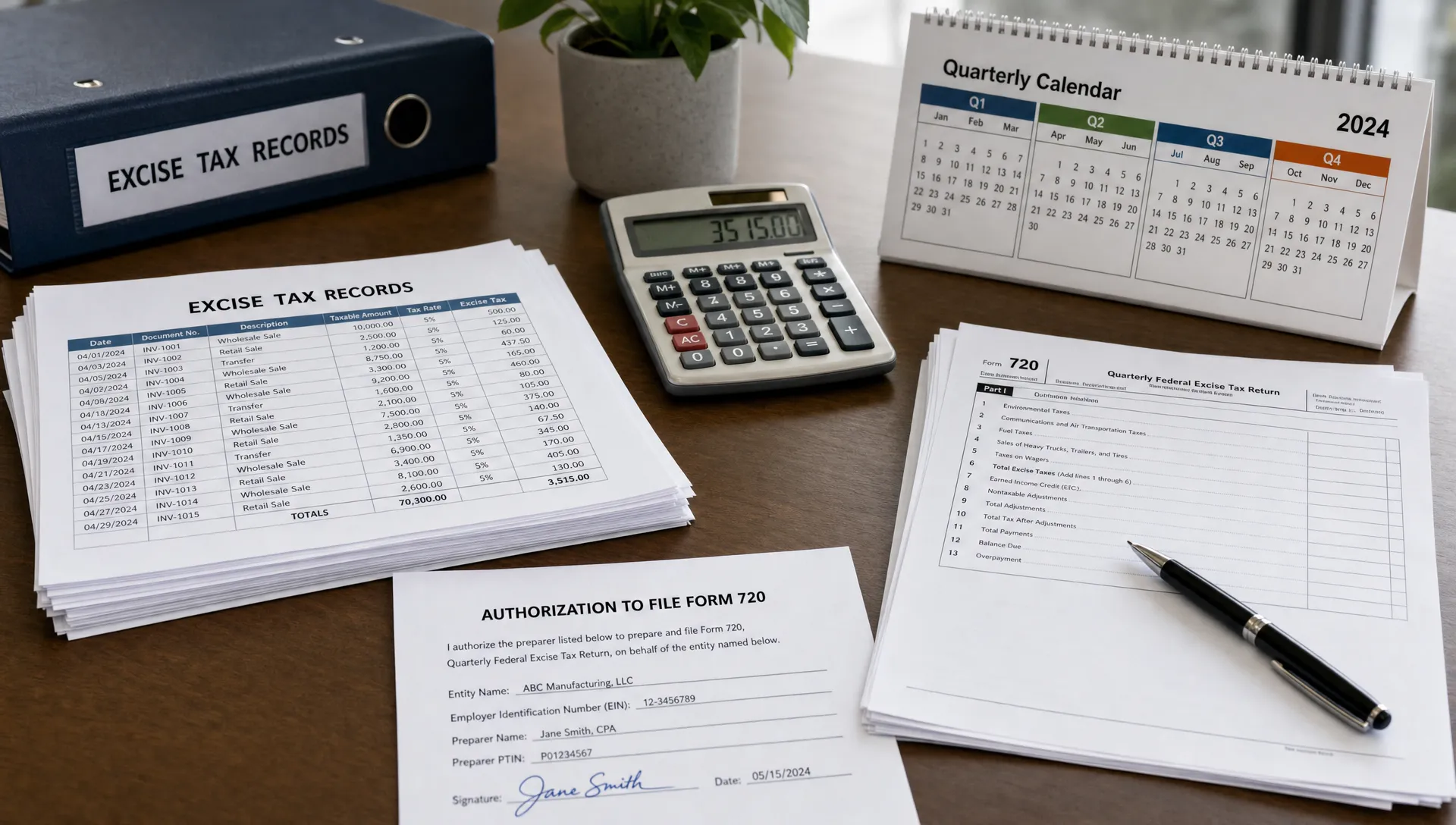
A CPA workflow for filing Form 720 online
A repeatable workflow helps a CPA firm file Form 720 efficiently without losing sight of client approval and audit support. The process below works for one-off filings and recurring quarterly clients.
- Confirm the client's filing requirement: Identify the activity, product, service, plan or transaction that may trigger federal excise tax. Do not rely only on the client's industry label.
- Collect source records: Request sales reports, gallons, premiums, policy details, plan participant counts, prior filings, EFTPS confirmations and any IRS notices that affect the period.
- Map the activity to Form 720 lines: Match the client's facts to the correct part, IRS number, tax rate, schedule or adjustment. Use the current IRS instructions for the filing period.
- Calculate tax and reconcile payments: Compare the calculated liability with deposits, credits and any amount due with the return.
- Prepare the return and review internally: Have a qualified preparer or reviewer check category selection, math, client identifiers and payment details.
- Obtain client approval: Send the completed return to the client for review and secure the required e-file authorization before transmission.
- E-file and save confirmation: File through an appropriate IRS-authorized e-file channel and retain the acceptance confirmation with the workpapers.
- Follow up on payments and notices: Confirm that any payment instructions were completed and monitor for IRS correspondence.
This workflow is especially useful for firms with multiple clients in transportation, energy, health benefits, insurance, manufacturing or retail sectors. Even if each client has a different excise tax profile, the firm can standardize intake, review and authorization.
Can a CPA file Form 720-X or Form 8849 for clients too?
Yes, a CPA may help clients with corrections and claims when properly authorized. The right form depends on the facts.
Form 720-X is generally used to amend certain previously filed Form 720 returns. A CPA may prepare it when a client discovers an error in the original filing, such as an incorrect tax amount, wrong line item or missed adjustment.
Form 8849, Claim for Refund of Excise Taxes, is used for certain excise tax refund claims. It has its own schedules and eligibility rules, so the CPA should confirm that the client qualifies before preparing the claim. The IRS e-file authorization process may also apply to Form 8849 when filed electronically.
For CPA firms, the key is not to treat amendments and refund claims as automatic. The workpapers should clearly show why the client is entitled to the correction or claim and how the amount was calculated.
Should CPAs file Form 720 online instead of on paper?
For most professional filing workflows, online filing is the cleaner option. Paper filing can work, but it creates more room for mailing delays, manual tracking problems and slower confirmation. E-filing gives the CPA and client a clearer record of submission and acceptance.
Online filing is also more practical when a CPA firm manages recurring quarterly clients. A platform built for Form 720 can help organize return preparation, reduce duplicate data entry and keep the process inside a secure online environment.
When choosing an e-file provider, CPAs should consider:
| Provider feature | Why it matters for CPA firms |
|---|---|
| IRS authorization | Confirms the platform can support electronic filing through an authorized channel |
| Form 720 category support | Helps the firm serve clients with different excise tax obligations |
| No software download | Reduces setup time for firms and clients |
| Secure data handling | Protects sensitive tax and business information |
| Customer support | Helps resolve filing questions before deadlines |
| Support for amendments and claims | Useful when clients need Form 720-X or Form 8849 assistance |
A CPA should also consider internal controls. Whoever prepares the return should not be the only person reviewing payment details, authorization and final submission for higher-risk clients.
Practical checklist for CPAs before submitting Form 720
Before filing Form 720 for a client, run through a final check. This is especially important when the client files infrequently or only reports a specific item like the PCORI Fee.
| Final check | Why it matters |
|---|---|
| Correct EIN and business name | Prevents IRS matching problems |
| Correct quarter selected | Avoids posting the return to the wrong tax period |
| Current IRS instructions used | Reduces errors from outdated rates or filing rules |
| Correct excise tax category | Ensures the right line, rate and schedule are used |
| Deposits reconciled | Helps identify underpayment or overpayment before filing |
| Client reviewed the return | Supports accuracy and informed approval |
| Form 8879-EX or other authorization retained | Documents e-file consent |
| E-file acceptance saved | Provides proof of filing |
| Payment confirmation saved | Supports notice response and client records |
A checklist cannot replace excise tax judgment, but it can prevent many avoidable filing mistakes.
Frequently Asked Questions
Can a CPA legally file Form 720 for a client? Yes. A CPA can prepare and file Form 720 for a client when properly authorized. If the CPA is paid to prepare the return, paid preparer rules generally apply, including PTIN use and signing the return when required.
Does the client still need to sign anything if the CPA e-files Form 720? Yes. The client should review and approve the return before filing. For electronic filing, Form 8879-EX may be used to authorize the ERO to enter the taxpayer PIN and submit the return.
Does a CPA need Form 2848 to file Form 720? Not usually for preparation and filing alone. Form 2848 is generally needed when the CPA will represent the client before the IRS, such as discussing account matters or responding to certain notices.
Can a CPA file the PCORI Fee on Form 720 for a benefits client? Yes. A CPA can help calculate and file the PCORI Fee when the client is subject to it. The PCORI Fee is generally reported once a year on the second quarter Form 720, due July 31.
Can a CPA pay Form 720 taxes for the client? A CPA can help coordinate payment, but the client should approve the payment method and provide funds. Some excise taxes have deposit rules that may require payment before the quarterly return due date.
Can a CPA amend Form 720 for a client? Yes. A CPA may help prepare Form 720-X when a previously filed Form 720 needs correction. The CPA should retain documentation showing the reason for the amendment and how the corrected amount was calculated.
Make Form 720 client filing easier
A CPA can file Form 720 for clients, but the filing should be supported by proper authorization, accurate excise tax analysis and a dependable e-file workflow. That is where the right online platform can save time for both the firm and the client.
eFileExcise720 is an IRS-authorized e-filing platform for Form 720. It supports online filing with no software download, secure data handling, simple dashboard navigation, personalized customer support, Form 720 amendments and Form 8849 claims support. If your firm needs a practical way to file Form 720 online for clients, you can create an account and start preparing returns through eFileExcise720.