

Form 720 filing Florida
If your Florida business is involved in certain products, services, or transactions, you may be required to report and pay federal excise taxes using IRS Form 720. This requirement is federal (not a Florida state filing), but it commonly applies to Florida-based companies in industries like fuel distribution, transportation, marine and aviation services, manufacturing and employers sponsoring certain health plans. File your Form 720 online in just 5 minutes with eFileExcise720. Register now
Before you go, here's some good news! You can save 20% on your filing with our platform! Use coupon code FET20 at checkout to claim your discount.
This page explains what Form 720 filing Florida Online means, who typically must file and how Florida taxpayers can file accurately and on time using an IRS-authorized e-file solution.
EFile Excise 720!
What Form 720 filing Florida means
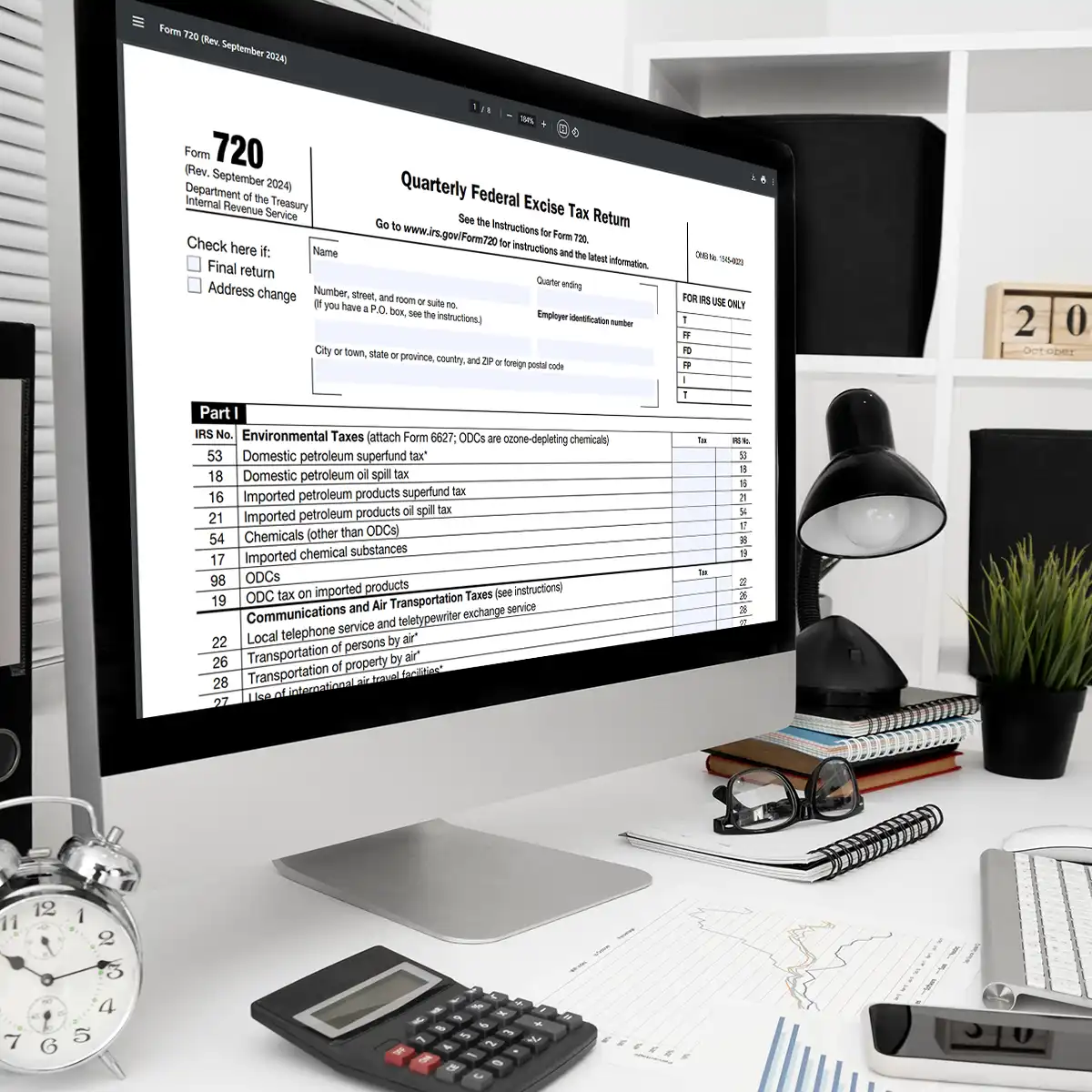
Form 720 is the IRS form used to file quarterly federal excise taxes. It's the form you use when your business deals with certain excise taxes tied to specific activities, or sometimes a one-off situation that still needs to be reported.
Florida businesses often search for 720 form Florida or IRS Form 720 Florida when they:
- They start a new excise-taxable activity, such as selling taxable fuel or offering services that fall under excise tax rules
- They need to report the PCORI fee, which is filed annually using Form 720
- Owe excise tax in one quarter and need a compliant way to file and document payment
- Need to correct a prior filing or request a credit or refund
If you are new to the filing, see this overview of Form 720 to understand how the return is structured.
Who is required to file IRS Form 720 in Florida?
There is no special “Florida version” of the form. IRS Form 720 filing in Florida applies when a Florida-based business
(or other taxpayer) is liable for a federal excise tax that must be reported on Form 720.
You may need to file if you are a Florida-based:
- Manufacturer, importer, or retailer of products subject to federal excise taxes (depending on the category)
- Fuel business involved in taxable fuel transactions (including certain sales, removals, or uses)
-
Service provider in categories that trigger federal excise
tax reporting - Employer or plan sponsor responsible for reporting and paying the PCORI fee (reported on Form 720)
- Transportation-related business involved in activities subject to federal excise taxes (for example, certain air transportation taxes)
Whether you must file depends on your facts: what you sell, what you do, how the transaction is structured and the IRS
rules for that tax category. If you are unsure, review the IRS instructions for Form 720 or consult a tax professional.
Common federal excise tax situations
for Florida businesses
Florida's economy includes major ports, tourism and travel, construction, logistics, agriculture and healthcare. Many businesses
in these sectors can run into excise tax obligations depending on what they do and how they are billed.
Here are examples of situations that often lead to federal excise taxes Florida businesses may need to report on Form 720.
| Florida business type | Example activity that may trigger Form 720 | Why it matters |
|---|---|---|
| Fuel distributors and resellers | Taxable fuel transactions (category-specific) | Fuel taxes can require Form 720 reporting plus deposit and schedule rules |
| Aviation and travel-related businesses | Certain air transportation taxes | Some transportation taxes are reported quarterly on Form 720 |
| Manufacturers and importers | Taxable sales of certain goods (where applicable) | Some excise taxes apply based on product type and sale/import rules |
| Employers and plan sponsors | PCORI fee for applicable health plans | PCORI is reported on Form 720 (typically annually, using the 2nd quarter return) |
For PCORI-specific guidance, you can also reference this pcori form resource.
Form 720 deadlines and payment rules
(important for accurate filing)
Form 720 is generally filed quarterly. The IRS due dates typically follow a standard schedule:
Due dates are:
Q1
due Apr 30
Q2
due July 31
Q3
due Oct 31
Q4
due Jan 31
If the due date lands on a weekend or legal holiday, it moves to the next business day.
Payments and deposits: Some excise tax liabilities require semi-monthly deposits (often made through EFTPS) rather than paying everything once per quarter. Whether this applies depends on the tax and your liability amount. The IRS provides details in the official Form 720 instructions and deposit rules. For general payment and deposit background, the IRS provides information on EFTPS.
How to file IRS Form 720 online in Florida
Florida taxpayers can file by paper mail, but many businesses prefer e-filing for faster submission,
fewer manual errors and electronic confirmation.
A practical, compliance-focused approach to Form 720 filing Florida usually looks like this:
Confirm what you owe and which lines apply
Identify the excise tax category that matches your activity and confirm what the IRS requires for that category (including any schedules, deposits, or supporting documentation). Keep clear records of taxable units, dates, invoices and any exemptions you are claiming.
Gather the quarter's filing inputs
Prepare the information you will need, such as:
- Business name, EIN, address and contact details
- The quarter you are filing for
- Taxable volumes, sales, or transactions by category
- Any credits or prior-period adjustments that apply under the IRS rules
- Any deposits already made (if applicable)
E-file through an IRS-authorized provider
Using an IRS-authorized platform usually makes things easier and faster, especially compared to mailing forms and waiting on manual processing. With eFileExcise720, you can file Form 720 online filing directly with no software downloads, no extra setup, just log in and get it done. The platform is built specifically for Form 720 and supports all Form 720 categories, plus common follow-on filings.
Review carefully before submission
Before transmitting the return, confirm that:
- You selected the correct quarter and tax categories
- Any deposit amounts and schedules are consistent with your payment history
- Your figures reconcile to your records
- Your business information is accurate
If you work with an accountant or tax professional in Florida, you can also
coordinate the data review with them before submission.
Amendments, credits and refunds (720-X and Form 8849)
If you've already filed and then realize something's off, maybe a number didn't line up or a detail was missed you might have to fix it with Form 720-X, which is basically the amended version of your quarterly excise return. Not every change goes there, but a lot of them do.
In some cases, especially when you're dealing with credits or trying to get money back, Form 8849 comes into play instead. This is pretty common for certain types of Florida businesses where refunds or allowable credits pop up more often than you'd expect. Either way, don't toss your paperwork. Keeping clear records that back up the claim can save you a lot of back-and-forth later.
For a broader overview that includes claims concepts, see this guide that references form 8849.
Why Florida businesses use eFileExcise720
for IRS Form 720 filing
When you are managing compliance deadlines and IRS-specific rules, the filing method matters.
eFileExcise720 is designed to help Florida-based businesses complete IRS Form 720 filing Florida
with a process that is clear and security-conscious. Key features include:
- IRS-authorized e-filing
- Free account creation
- No software download needed
- Secure data protection
- Simple dashboard navigation
- Personalized customer support
- Support for Form 720 amendments (720-X)
- Support for Form 8849 claims
If you want to learn more about the company behind the platform, visit about us page. If you are evaluating costs before getting started, see pricing.
Frequently Asked Questions
Q1: Do Florida businesses need to file IRS Form 720?
Yes. Florida businesses in fuel, aviation, marine, manufacturing, or those sponsoring self-insured health plans may be required to file IRS Form 720 with the IRS quarterly.
Q2: Is there a separate Florida state excise tax form?
No. Form 720 is a federal IRS form. There is no separate Florida state version. Florida businesses file directly with the IRS using the standard Form 720.
Q3: What is the Form 720 filing deadline for Florida businesses in 2026?
Q1 — April 30, Q2 — July 31, Q3 — October 31, Q4 — January 31, 2027. PCORI filers use the Q2 return, due July 31.
Q4: Which Florida industries most commonly file Form 720?
Fuel distributors, aviation businesses, marine operators, manufacturers, importers, and employers sponsoring self-insured health plans are the most common Form 720 filers in Florida.
File Form 720 online in Florida with
an IRS-authorized e-file provider
If your Florida business owes federal excise taxes, filing accurately and on time helps you stay compliant and avoid preventable IRS notices and penalties. Start your Form 720 filing Florida today with eFileExcise720 so you can file Form 720 online with an IRS-authorized provider, supported by a straightforward process built for federal excise tax reporting.
Create a Free AccountWe also provide services in Form 720 filing California, Form 720 filing Texas, Form 720 Filing Georgia