

Form 720 vs Form 8849: What Florida Businesses Should Know
Florida’s economy runs on movement, tourism, energy, and healthcare, industries that intersect with federal excise tax more often than many owners expect. If you buy or sell fuel, operate transportation services, import petroleum products, or sponsor a self-insured health plan, you might face a recurring question:
Do you report and pay using IRS Form 720?
Or do you recover overpaid excise tax using Form 8849?
This guide goes beyond the basic definitions to help Florida businesses make strategic decisions around cash flow, documentation, and timing, including how to avoid the most common “wrong form, wrong quarter” mistakes.
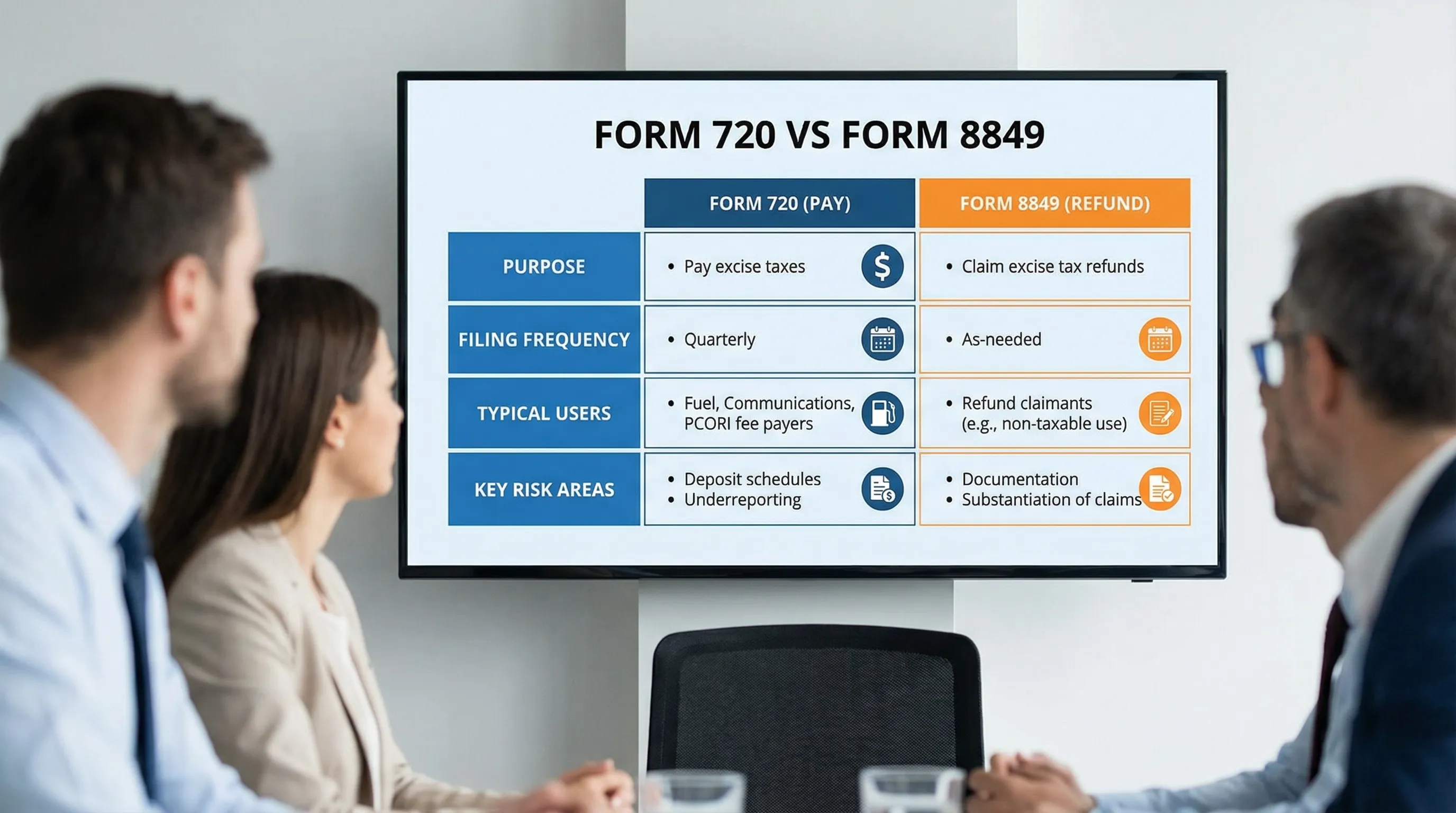
Form 720 vs Form 8849 in one sentence
Form 720 is for reporting federal excise tax liability (and paying it), while Form 8849 is for claiming refunds or credits of excise taxes you already paid.
That sounds simple, but operationally, Florida businesses often touch both forms in the same year.
Why Florida businesses run into both forms more than they think
Florida has unique drivers that increase excise-touchpoints:
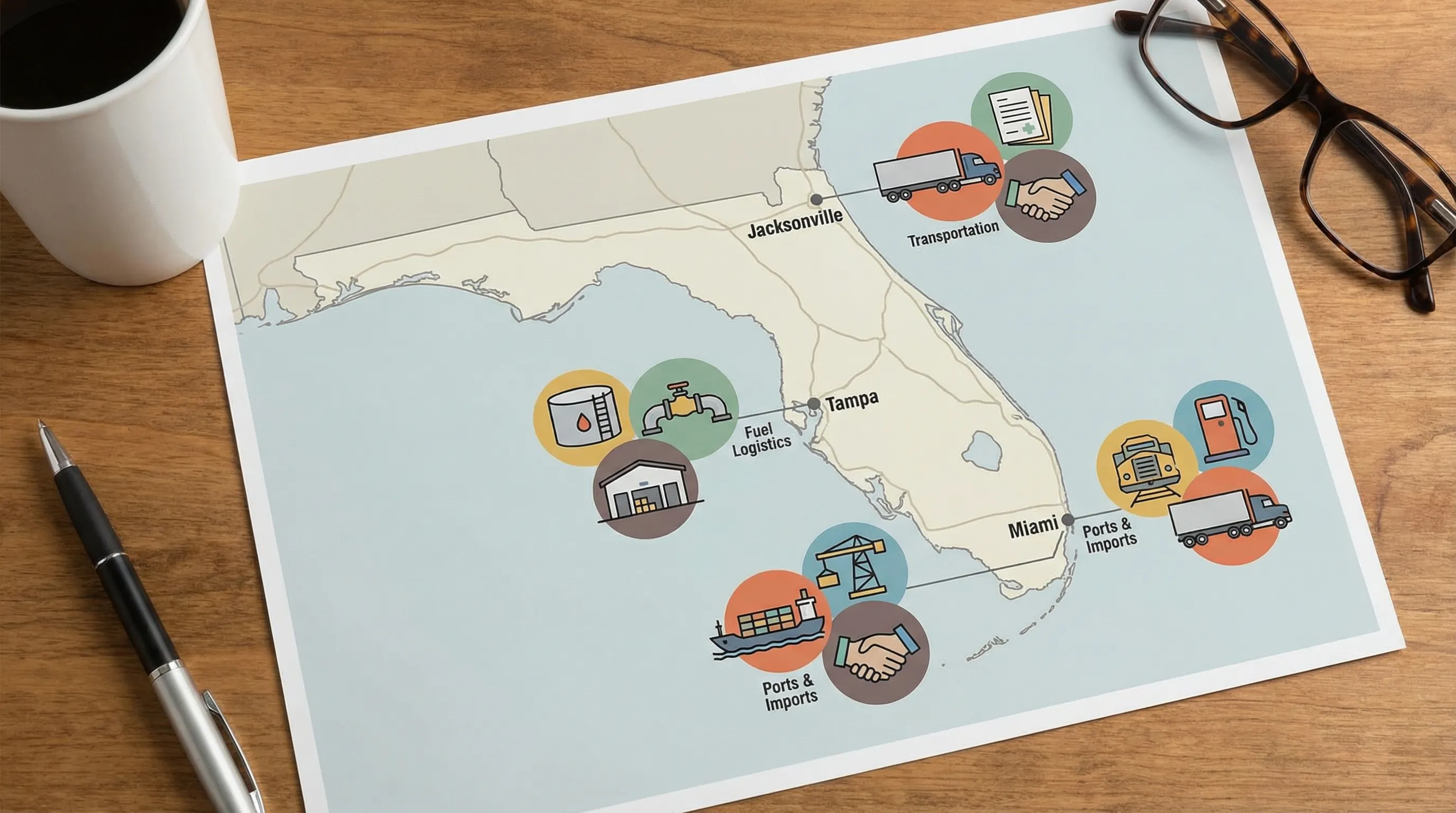
Ports, imports, and fuel logistics (Jacksonville, Tampa Bay, Port Everglades, Miami): more exposure to fuel and petroleum-related excise situations.
Aviation, marine, and tourism operations: more off-highway or specialized fuel uses that can lead to refund scenarios.
A large employer base with self-funded or level-funded health plans: potential PCORI filing obligations through Form 720.
A notable national signal for PCORI exposure is plan funding. The Kaiser Family Foundation (KFF) has reported that a majority of covered workers are in self-funded plans (a key driver for PCORI responsibility).
The practical comparison Florida operators should use
Here is a decision-oriented view, built for owners and controllers who need to pick the right workflow.
| Topic | Form 720 (Quarterly Federal Excise Tax Return) | Form 8849 (Claim for Refund of Excise Taxes) |
|---|---|---|
| Primary purpose | Report and pay excise tax due | Claim refund or credit for excise tax already paid |
| Typical timing | Filed by quarter (Q1–Q4) | Filed as eligible claims arise (schedule-specific rules apply) |
| Common Florida triggers | Communications, fuel-related lines, environmental taxes, PCORI online reporting | Fuel used in qualifying nontaxable uses, export-related claims, certain adjustments |
| Key operational risk | Late filing, wrong line mapping, deposit issues | Insufficient documentation, mismatched volumes, missing claimant details |
| “Best practice” owner metric | Quarter-close excise reconciliation | Claim substantiation packet completeness |
For official guidance, rely on the IRS instructions for each form, starting with Form 720 instructions and Form 8849.
Strategic lesson: treat Form 720 like a quarterly “tax close,” and Form 8849 like an “audit file”
If your team handles excise tax like a once-a-quarter scramble, you will feel the pain most in two places:
Form 720: calculation errors show up fast as penalties and interest.
8849 form: weak support can slow or derail refunds.
A better operating model is to separate responsibilities:
Form 720 (pay side): build a repeatable quarter-close routine
Think of Form 720 as a monthly-tracked, quarterly-reported obligation.
What improves outcomes for many Florida filers:
Create a “taxable events” map by site (terminal, marina, fleet yard, warehouse).
Reconcile invoice quantities to internal meters and dispatch logs.
Lock a calendar for form 720 filing instructions and approvals.
Form 8849 (refund side): build a substantiation packet before you file
Refunds are not just forms, they are documentation stories.
Strong claims often include:
Proof excise tax was paid.
Proof of eligible use (dates, location, equipment, job records).
Volume math that ties to purchase and consumption logs.
Two real-world Florida scenarios (patterns you can benchmark)
The examples below are anonymized patterns drawn from common industry workflows, not a promise of results.
Example A: Tampa service company with self-insured benefits (PCORI)
A 120-employee services firm sponsors a self-insured plan and assumes “no excise taxes apply to us because we don’t sell fuel.” Their exposure is actually PCORI filing, which is reported on Form 720 (typically due annually for PCORI, even though Form 720 is a quarterly return).
What goes wrong:
PCORI gets treated like payroll tax and is missed.
The business searches pcori online in July, but has not pre-calculated covered lives.
Better approach:
Assign PCORI ownership to benefits administration with finance sign-off.
Document which counting method is used year over year.
Example B: South Florida fleet and equipment operator (refund opportunity)
A contractor operating a mix of highway vehicles and off-highway equipment buys significant fuel volumes. Some uses may qualify for refund treatment depending on facts and eligibility.
What goes wrong:
Fuel is tracked in aggregate, so the business cannot defend which gallons were used in eligible activities.
The team files Form 720 to “net it out,” when the better path may be a properly supported 8849 claim.
Better approach:
Track fuel by tank, job, and equipment class.
Treat refund prep as an ongoing data discipline, not a year-end reconstruction.
A timing and cash flow insight: when “refund strategy” becomes a working capital lever
For many Florida operators, excise tax refunds are not huge individually, but they can matter because:
They tend to be repeatable if the underlying activity is repeatable.
They can become a forecastable cash flow line when claim documentation is systematized.
A simple dashboard metric to add to your monthly close:
| Metric | Why it matters | What “good” looks like |
|---|---|---|
| Eligible gallons / taxable gallons (if applicable) | Signals refund opportunity and documentation burden | Stable ratio with documented drivers |
| Claim readiness score (docs complete %) | Predicts refund friction | 90%+ before filing |
| Filing timeliness (days before due date) | Reduces penalty risk | Buffer built into close calendar |
How eFileExcise720 fits into a modern excise workflow
If you’re managing 720 filing Florida compliance across multiple lines, manual processes can break under scale (more sites, more fuel cards, more plan changes).
eFileExcise720 is an IRS-authorized e-filing portal designed to streamline:
Form 720 online filing (no software download)
Support for all Form 720 categories
Form 720 amendments (720-X)
Form 8849 claims when you need a refund path
If your operations team travels between Florida locations to gather invoices and logs, tightening travel costs is also part of operational excellence. Some businesses centralize lodging for finance and compliance site visits using a single booking hub with flexible options.
Frequently Asked Questions
Do Florida businesses have different Form 720 rules than other states?
Federal excise tax rules are federal, so the core rules are the same. Florida-specific differences usually come from industry mix (ports, tourism, fleets) and how your business operations create taxable events.
Can I file Form 720 and Form 8849 in the same year?
Yes. Many businesses report and pay liabilities on Form 720 while also filing Form 8849 for eligible refunds or credits, depending on the tax type and facts.
Is PCORI filed quarterly on Form 720?
PCORI is reported on Form 720, but it is generally filed and paid annually for the applicable plan year, even though Form 720 is a quarterly return. Always confirm due dates and rules for your plan year.
What’s the biggest documentation mistake on the 8849 form?
Not being able to tie the claim back to proof tax was paid and proof of eligible use. Strong volume tracking and consistent logs make claims more defensible.
What if I already filed Form 720 but later discover an error?
You may need an amendment using Form 720-X or a refund claim route depending on the situation. The right fix depends on the specific excise category and timing.
Next step: choose the right form, then make it repeatable
The best compliance teams do not just file, they build a system that holds up in busy quarters and during staff turnover.
If you want to file Form 720 online or submit a refund claim with better control and support, eFileExcise720 can help you e-file as an IRS-authorized provider and keep your excise workflow organized. If you’d like our team to contact you about your Form 720 or Form 8849 filing scenario, create your free account and reach out through the support options on the platform