

How Tanning Salons Should File Form 720 for Federal Excise Taxes
Indoor tanning is one of the few consumer services that comes with its own federal excise tax. That makes compliance less about doing taxes once a year and more about building a repeatable quarterly workflow that stands up to IRS scrutiny.
For tanning salon owners and operators, the practical challenge is usually not whether Form 720 exists, it is how to file it correctly, on time, and how to recover overpayments when they happen using a Form 8849 claim for refund of excise taxes.
Below is a tanning-salon specific guide to how tanning salons should file Form 720 for federal excise taxes, including late-filing realities, operational tips, and when tax form 8849 matters.
What the IRS indoor tanning excise tax is (and why it matters to salons)
The federal excise tax applies to certain indoor tanning services. In practice, it affects pricing, POS setup, and revenue recognition because salons must collect and remit the tax based on taxable charges for tanning.
Even if your salon uses a third-party booking system or sells tanning in memberships, the IRS still expects the business to:
Identify taxable indoor tanning charges.
Track them by quarter.
File Form 720 accurately.
Pay and reconcile the right amounts.
For the IRS starting point, see the official Form 720 page and the current quarter instructions.
Form 720 basics for tanning salons (what you are actually filing)
Form 720 (Quarterly Federal Excise Tax Return) is the return used to report and pay a variety of excise taxes, including the excise tax on indoor tanning services.
A good mental model is: your salon is running a quarterly mini close for excise tax.
Typical workflow that reduces mistakes
Most issues salons run into are operational, not theoretical. A strong workflow usually looks like this:
During the quarter: Your POS tracks taxable tanning revenue (and ideally distinguishes taxable tanning from non-tanning items like product sales, if applicable).
Quarter-end close: You reconcile POS totals to your books (and to bank deposits if needed).
Return prep: You map the final taxable amount to the correct Form 720 line and compute the tax.
Payment and filing: You pay through EFTPS (typical for federal excise payments) and submit the return.
If you want a simpler administrative path, eFileExcise720 is an IRS-authorized e-file provider focused on Form 720 and related excise filings. (This guide does not assume any specific features or pricing.)
Form 720 due dates (quarterly deadlines you cannot miss)
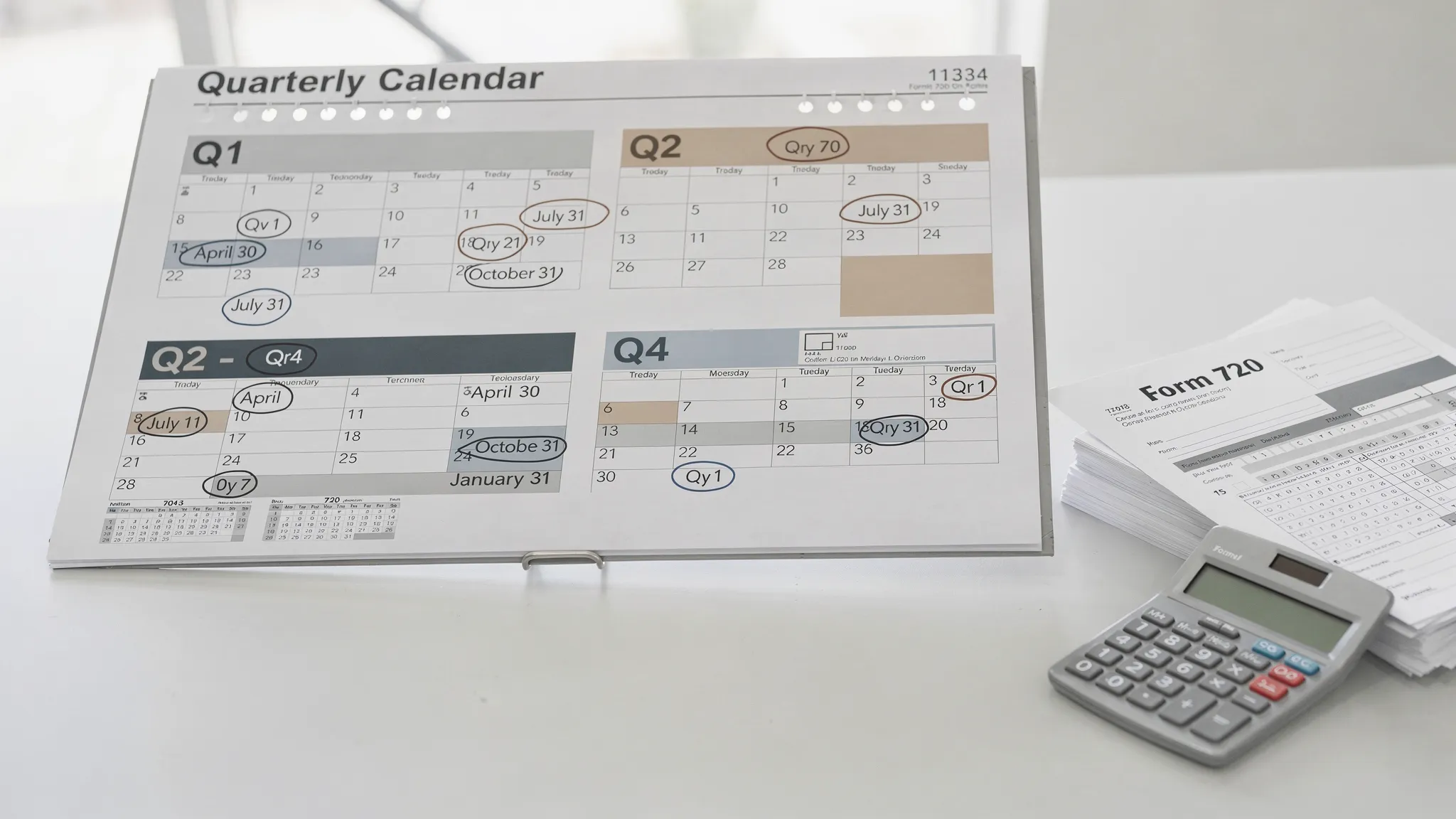
Form 720 is due quarterly. Standard due dates are:
| Quarter (Form 720) | Period covered | Due date (typical) |
|---|---|---|
| Q1 | Jan 1 to Mar 31 | April 30 |
| Q2 | Apr 1 to Jun 30 | July 31 |
| Q3 | Jul 1 to Sep 30 | October 31 |
| Q4 | Oct 1 to Dec 31 | January 31 |
If the due date falls on a weekend or legal holiday, the deadline generally moves to the next business day.
The biggest compliance risk for salons: misclassifying revenue
For salons, the hardest part is often separating:
Taxable indoor tanning services nfrom
Non-tanning revenue streams (retail products, spa services, fees, packages that bundle multiple services, etc.).
The IRS cares about how charges are structured and what customers are actually paying for. If your business model changes (new membership tiers, all-inclusive packages, promotional bundles), it is smart to re-check how the tax applies and whether your POS configuration still matches reality.
Strategic takeaway: Treat the excise tax as a product design constraint. When you change pricing, make sure the tax treatment is still correct before you roll it out across locations.
Market reality: why excise tax compliance is becoming more operational
Across service businesses, compliance is increasingly system-driven (POS exports, accounting integrations, quarterly close checklists). For tanning salons, that trend matters because excise tax errors typically come from:
Inconsistent POS tagging of taxable vs non-taxable items.
Manual spreadsheet adjustments with no audit trail.
Quarter-end rush filing where sales data is not reconciled.
Simple “Quarterly Close” chart you can use internally
Here is a practical way to track where filing problems usually come from, and how to prevent them.
| Step | What can go wrong | Control that prevents it |
|---|---|---|
| POS setup | Taxable items not coded correctly | Lock taxable item categories and document changes |
| Data export | Missing locations or date filters | Standard export template for each quarter |
| Reconciliation | POS totals do not match accounting | Tie-out sheet with explanations for differences |
| Filing | Wrong quarter or wrong line item | Checklist + review against Form 720 instructions |
| Payment | Payment misapplied to wrong period | Save EFTPS confirmation and label period clearly |
Late Form 720 filing online: what to do when you missed a quarter
If you missed a deadline, you are not alone, especially for new salons or owners who inherit bookkeeping mid-year. The key is to act quickly and file the correct quarter, rather than trying to roll it into the next return.
Late filing typically increases exposure to penalties and interest depending on facts and timing. Your best move is usually:
- Identify the exact quarter(s) missed.
- Rebuild taxable tanning totals from POS for each quarter.
- File each quarter’s Form 720 separately.
- Pay what you can as soon as possible and keep documentation.
If the goal is speed and traceability, many businesses prefer Late Form 720 Filing Online because it reduces mailing delays and creates a clearer submission trail than paper.
When Form 8849 comes into the picture (refunds and corrections)
Tanning salons most often think in terms of file Form 720 and pay. But real operations are messy: customers get refunds, transactions are voided, memberships are adjusted, and sometimes the excise tax is over-collected or over-remitted.
That is where Form 8849 can matter.
Form 8849 vs Form 720-X vs credits on Form 720
The IRS provides multiple mechanisms, and picking the wrong one can slow everything down.
| If your situation is… | The mechanism is usually… | Why |
|---|---|---|
| You need to correct a previously filed quarter | Form 720-X | It is the amended excise return |
| You are claiming a refund that is specifically claimed via 8849 schedules | 8849 form | It is a dedicated refund claim pathway |
| You are eligible to take a credit on the quarterly return | Form 720 (Schedule C when allowed) | Reduces net tax due on that filing |
If you are exploring a Form 8849 claim for refund of excise taxes, start by confirming that your situation matches the schedules and requirements in the current IRS instructions for tax form 8849.
For official context, see the IRS Form 8849 page.
Lessons learned from multi-location operators
Operators with multiple locations tend to handle refunds and corrections more smoothly because they standardize two things:
A documented policy for when POS refunds trigger an excise tax adjustment.
A quarter-by-quarter exception log that can be tied back to original receipts.
Strategic takeaway: If you want fewer IRS notices, make your refund logic auditable. It is less about the dollar amount and more about being able to explain it.
PCORI Fee and the “PCORI 720 Form” confusion (what salon owners should know)
Some filers associate Form 720 with the PCORI Fee (Patient-Centered Outcomes Research Institute fee) because PCORI is reported on Form 720 by certain plan sponsors.
For most tanning salons, PCORI is not part of the indoor tanning excise tax workflow. However, if you also sponsor certain health plans, your organization may have separate PCORI responsibilities that use Form 720.
If PCORI applies to your business structure, rely on the IRS PCORI guidance and the current Form 720 instructions. (Because PCORI rules are fact-specific, confirm with a qualified advisor.)
File by mail or e-file: the operational comparison for salons
Most salons prefer e-file for speed and proof of submission. Mailing can still be valid in some situations, but operationally it tends to be harder to manage.
| Filing method | Where it helps | Where it can hurt |
|---|---|---|
| E-file | Faster submission confirmation and fewer “mail risk” issues | Still requires correct data and quarter selection |
| Familiar for some owners and bookkeepers | Delivery time, manual processing delays, missing signature risk |
If your goal is to keep excise compliance from consuming owner time, using an IRS-authorized provider like eFileExcise720 can be a practical operational choice.

Practical checklist: what to document each quarter (to reduce IRS notices)
The IRS pattern is consistent: notices are often triggered when totals cannot be reconciled quickly.
Keep a simple quarterly folder (digital is fine) with:
POS export showing taxable indoor tanning revenue for the quarter.
Any exception log for refunds, voids, membership adjustments.
Your Form 720 workpaper showing the calculation.
EFTPS payment confirmation.
A copy of the filed return.
For retention basics, see the IRS recordkeeping guidance.
Frequently Asked Questions
Do tanning salons have to file Form 720?
Yes, if your salon is liable for the excise tax for indoor tanning services for that quarter, you generally file Form 720 for that quarter. Confirm the latest Form 720 instructions and how your services are categorized.
What is the excise tax on indoor tanning services?
It is a federal excise tax that applies to certain indoor tanning services. Your salon typically collects it on taxable tanning charges and remits it on Form 720.
Can I do Late Form 720 Filing Online if I missed a deadline?
In many cases, yes. Filing online can help reduce delays and create clearer submission records than mailing, but you still must file the correct quarter and reconcile your taxable totals.
When should I use a Form 8849 claim for refund of excise taxes?
Use tax form 8849 when you are making a refund claim that fits Form 8849 eligibility and schedule requirements. If you are simply correcting a previously filed Form 720, Form 720-X may be the better mechanism.
Is Form 8849 the same as Form 720-X?
The 8849 form is generally used for specific excise tax refund claims, while Form 720-X is used to amend a previously filed Form 720.
Does the PCORI Fee apply to tanning salons, and is it filed on the pcori 720 form?
PCORI is reported on Form 720 by certain plan sponsors. It is separate from tanning excise tax. If your business sponsors a plan that triggers PCORI, confirm requirements with the IRS guidance and a qualified tax professional.
File Form 720 with less friction
If you want a faster, clearer process than mailing, eFileExcise720 is an IRS-authorized option for e-filing Form 720 and supporting related excise filings. When compliance is quarterly, the best win is a repeatable workflow that you can run every time, even when staff or systems change.